For kids, families, classrooms, and adults
Memory Matching Games Guide
A practical guide to choosing, playing, and adapting memory matching games online or with printable cards.
What are memory matching games?
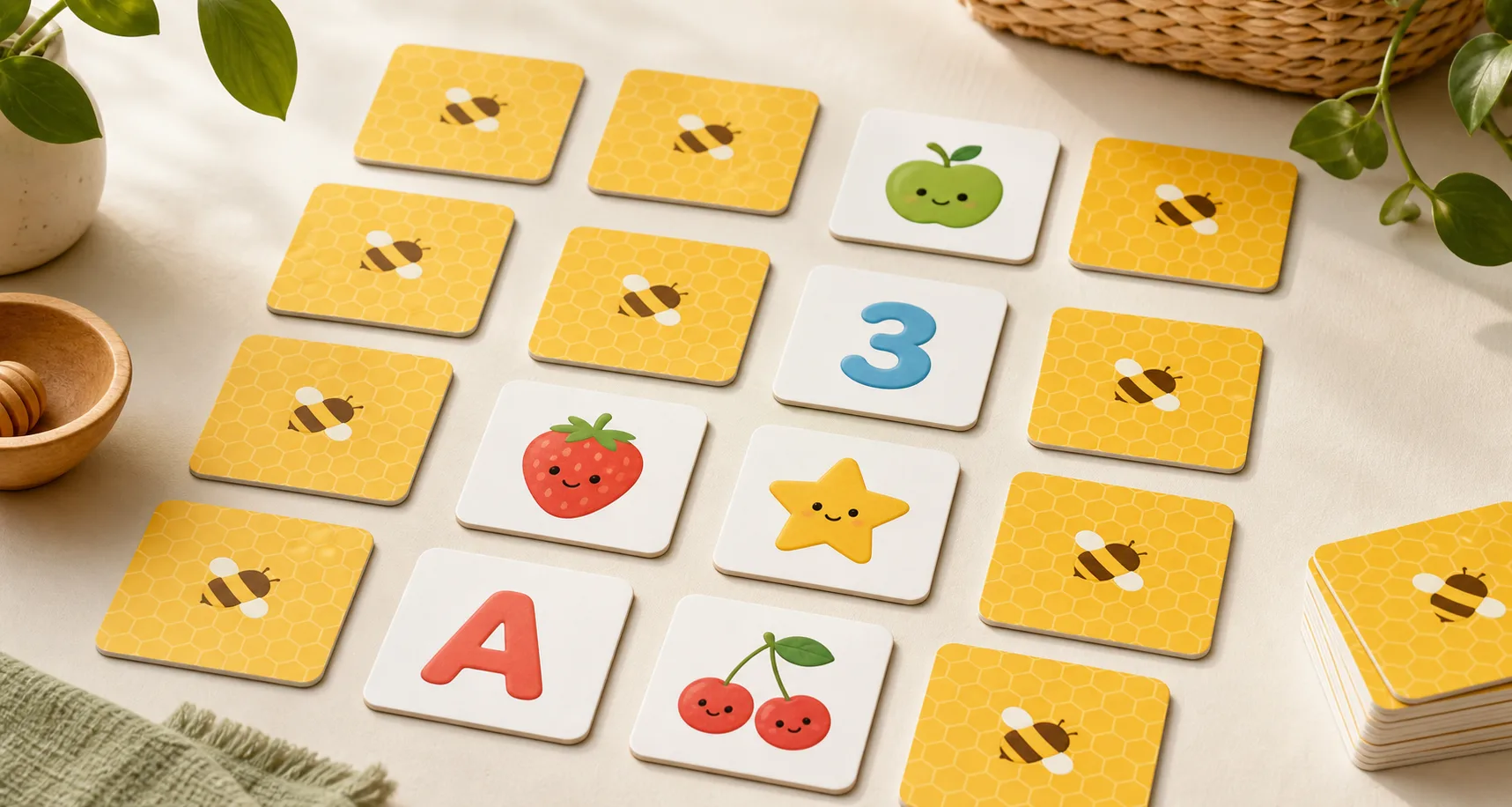
Memory matching games ask players to find pairs of hidden cards. A pair might be two identical cards, like two fruit cards, or two related cards, like an uppercase letter and its lowercase match in a letter matching game. Players flip two cards at a time, remember what they saw, and keep matching until every pair is found.
The rules are simple enough for young children, but the challenge scales well. More cards, related pairs, turn taking, and time pressure can make the same basic game useful for family play, classroom practice, or a quick brain break.
Why memory games are useful
Working memory
Players hold recent card locations in mind and update that mental map every turn.
Attention
The game rewards careful watching, especially when another player reveals a useful card.
Pattern recognition
Related-pair games help players connect concepts, symbols, words, numbers, and images.
Confidence
Short rounds give players a clear finish line and lots of small wins.
How to choose the right difficulty
Start with fewer pairs than you think you need. A round that ends with focus and curiosity is better than one that drags. On Memoryy Bee, most games can be played with 4, 8, 12, 16, or 20 pairs, so difficulty can grow naturally.
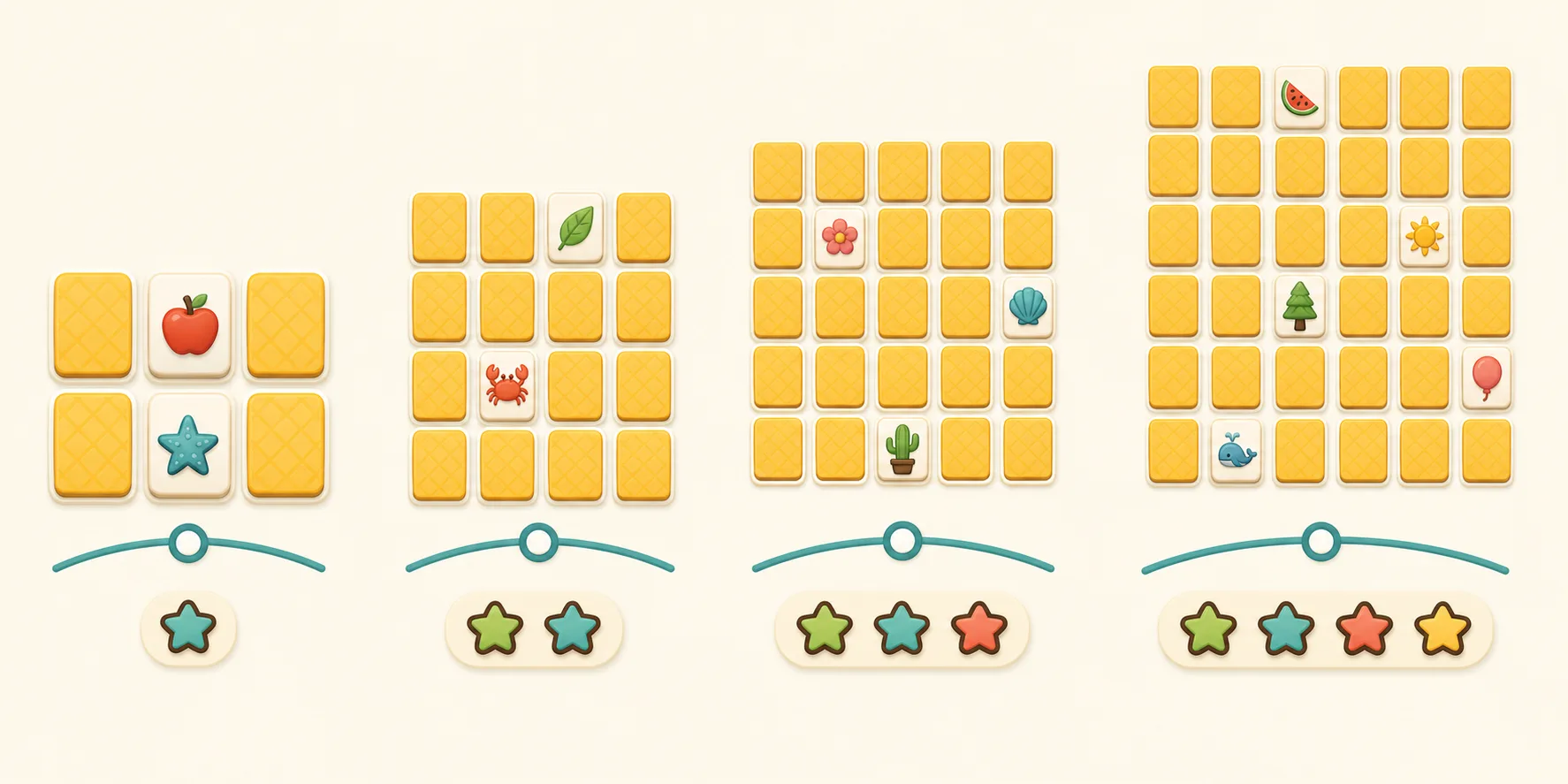
- New players: start with 4 pairs and identical cards.
- Early elementary: try 8 or 12 pairs with familiar themes like animals, fruits, or everyday objects.
- Learning practice: use related pairs for vocabulary, math facts, or geography.
- Older kids and adults: increase the grid size or play several quick rounds.
Online vs. printable memory games
Online games are great when you want instant play, adjustable pair counts, and no setup. Printable games are better for hands-on practice, classroom centers, travel, or screen-light activities.
A useful rhythm is to introduce a theme online, then print the same kind of game when players are ready to practice away from the screen.
Simple ways to play
Solo practice
Play one short round and try to finish with fewer moves next time.
Family turns
Take turns flipping cards. If a player finds a match, they keep the pair and play again.
Classroom review
Use related pairs for vocabulary, letter cases, numbers, flags, or math facts.
Quick brain break
Choose 4 or 8 pairs and finish a complete round in a few focused minutes.


